

20230516La%20De%CC%81fense%20ArenaNanterre_27.jpg)
20230516La%20De%CC%81fense%20ArenaNanterre_21.jpg)
20230516La%20De%CC%81fense%20ArenaNanterre_29.jpg)
People who have never seen Bruce Springsteen live often assume the appeal lies in the songs, the marathon running times or the legendary E Street Band. Those things matter, of course, but they do not fully explain the experience. There is something else at work, something difficult to quantify. A Springsteen concert becomes a gathering built around stories, memories, hopes and the peculiar ability of rock and roll to make thousands of strangers feel connected.
I had enjoyed Springsteen's records for years before finally seeing him live in 2012. By then I had attended more concerts than I could reasonably count, yet that first encounter left me stunned. Nearly four hours of music somehow felt fleeting. The connection between the band and the audience seemed almost supernatural. Like many converts before me, I immediately wanted to experience it again.
The second time was different. Seated high in the back of a vast stadium, far removed from the action, I found myself admiring the performance more than participating in it. The songs were still there, the musicianship was still there, but the sense of immersion had faded. As a result, I resisted the temptation to return for quite some time.
Until now.
Because Bruce Springsteen is seventy-three years old. Time, which has always loomed large in his songwriting, has become impossible to ignore. Carrying a production of this scale no longer appears quite as effortless as it once did, and that vulnerability adds an unexpected emotional dimension to the evening. Bruce is human after all. We have that in common.
That awareness permeates much of the show. Previous tours often balanced political commentary, social observation and personal storytelling against a backdrop of celebration and escape. This time, mortality sits much closer to the surface. Death, memory, friendship and absence become recurring themes, lending the evening a weight that distinguishes it from previous tours.
Officially, this is a tour promoting Only the Strong Survive, his recent collection of soul covers. In practice, however, the evening often feels like a guided tour through the many facets of the Springsteen catalogue. The setlist may be largely fixed from night to night, but it is assembled with enough care and intelligence that it never feels mechanical. If anything, the predetermined structure allows the themes to emerge more clearly.
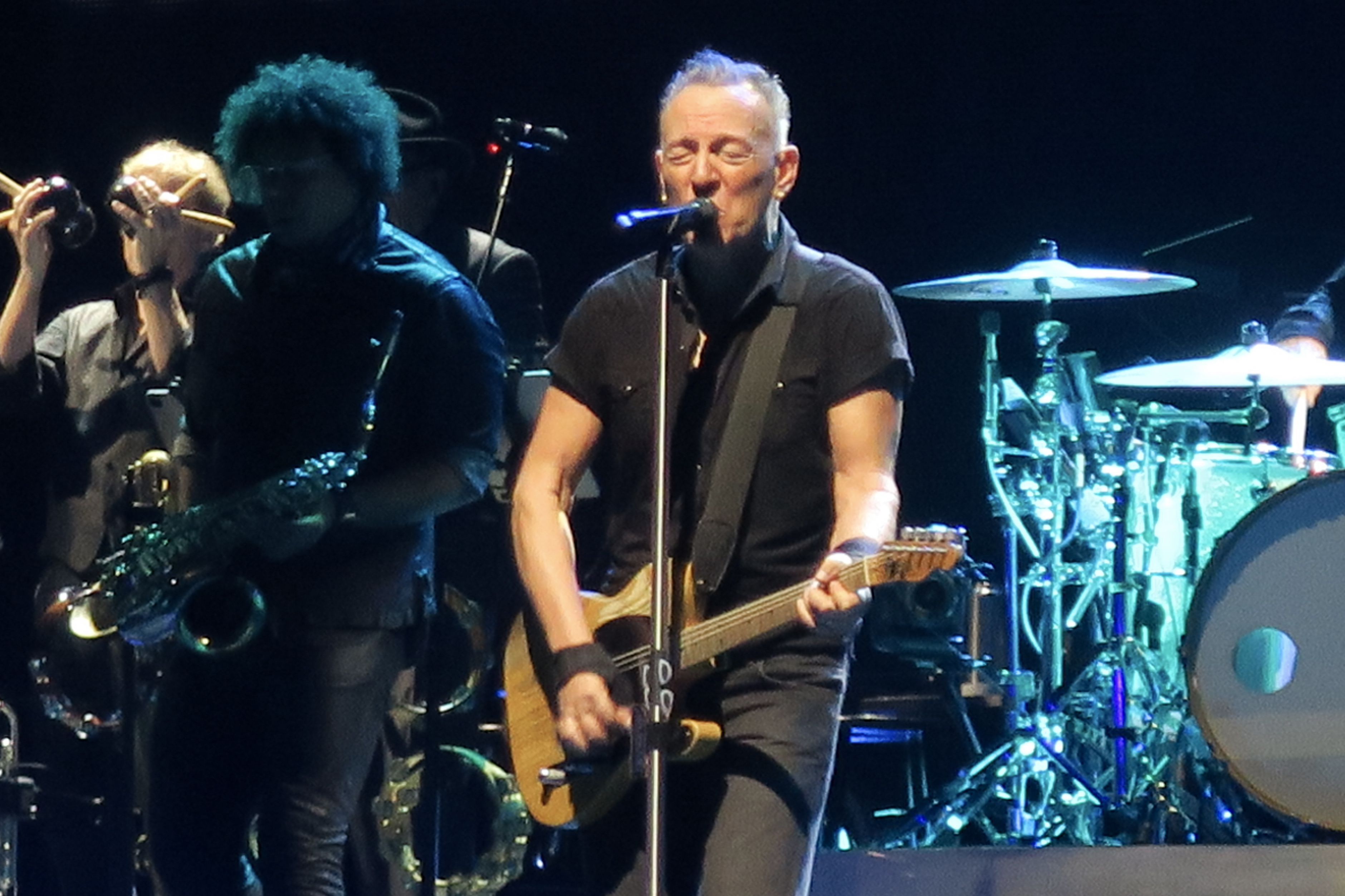
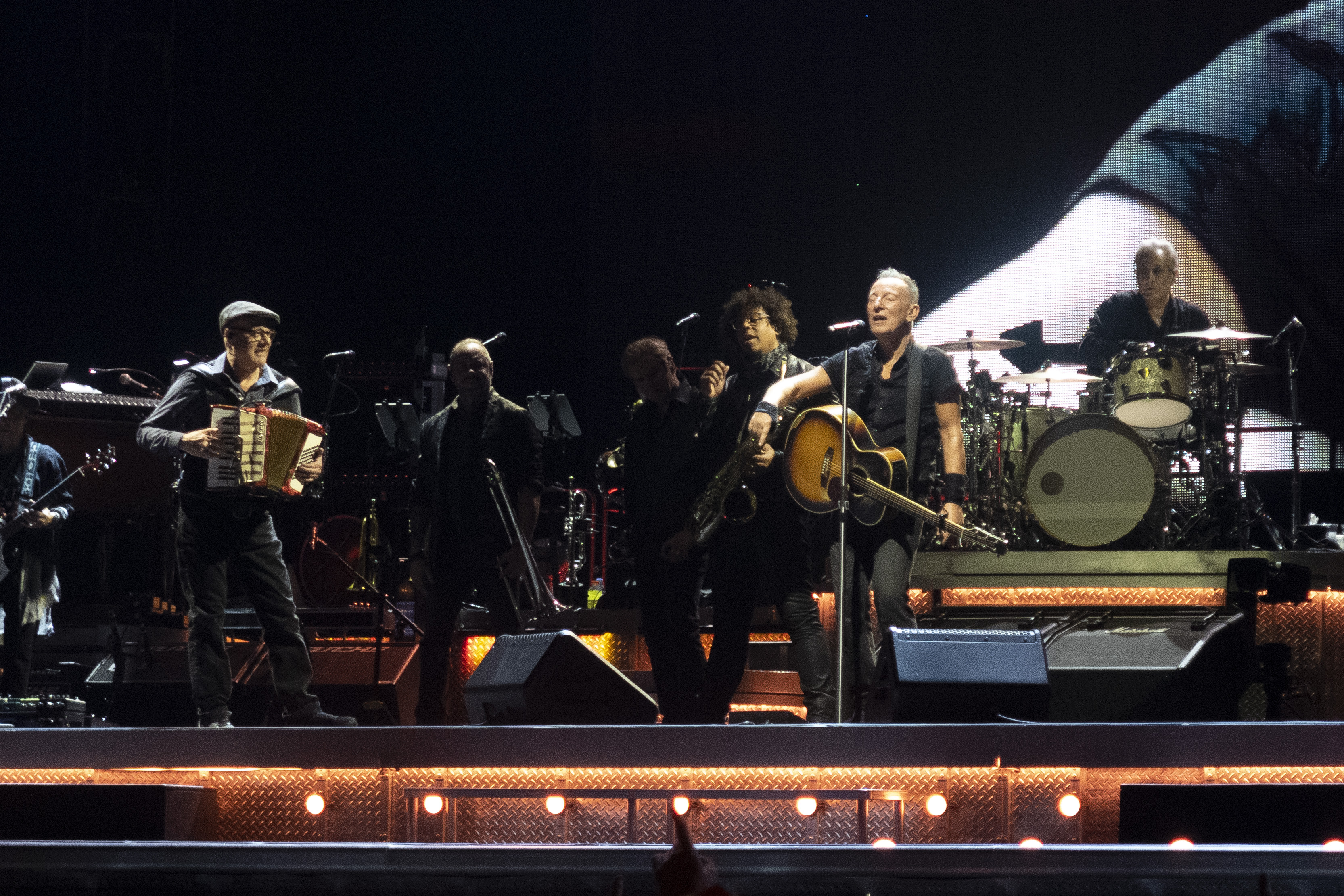
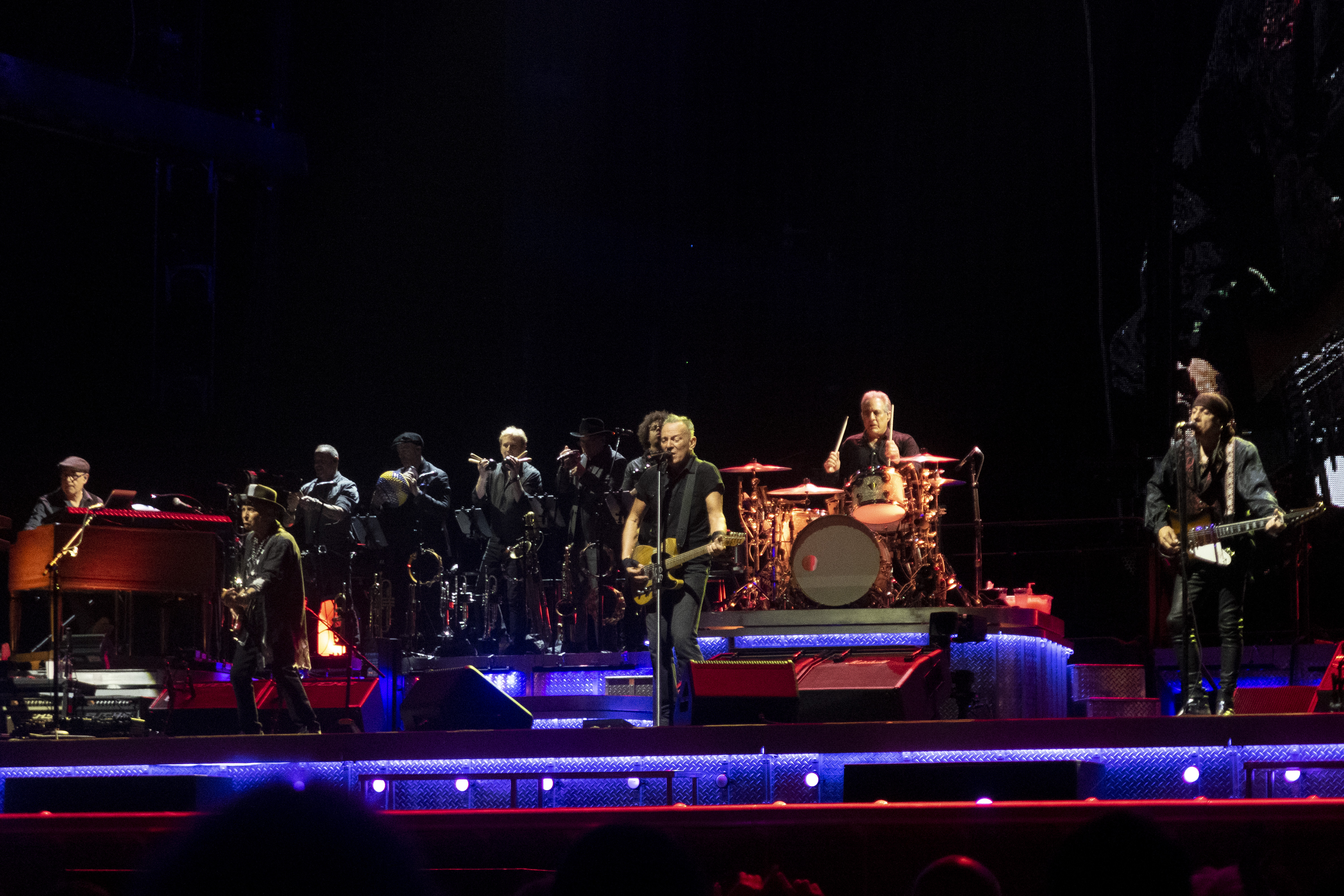
At 7:10, the house lights go down and the members of the E Street Band gradually take their places. Roy Bittan, Jake Clemons, Max Weinberg, Nils Lofgren, Steven Van Zandt and finally Springsteen himself. Then comes the familiar count-off. One, two, three, four.
The transition from anticipation to impact remains one of the great thrills in live music. "My Love Will Not Let You Down" immediately establishes the energy level for the evening before giving way to the gritty "Death to My Hometown," a song whose depiction of economic devastation remains every bit as relevant today as when it was written. Then comes "Ghosts," where the themes that haunt the rest of the evening begin to reveal themselves. Springsteen has spent much of his career writing about memory. Here, memory becomes something almost tangible.
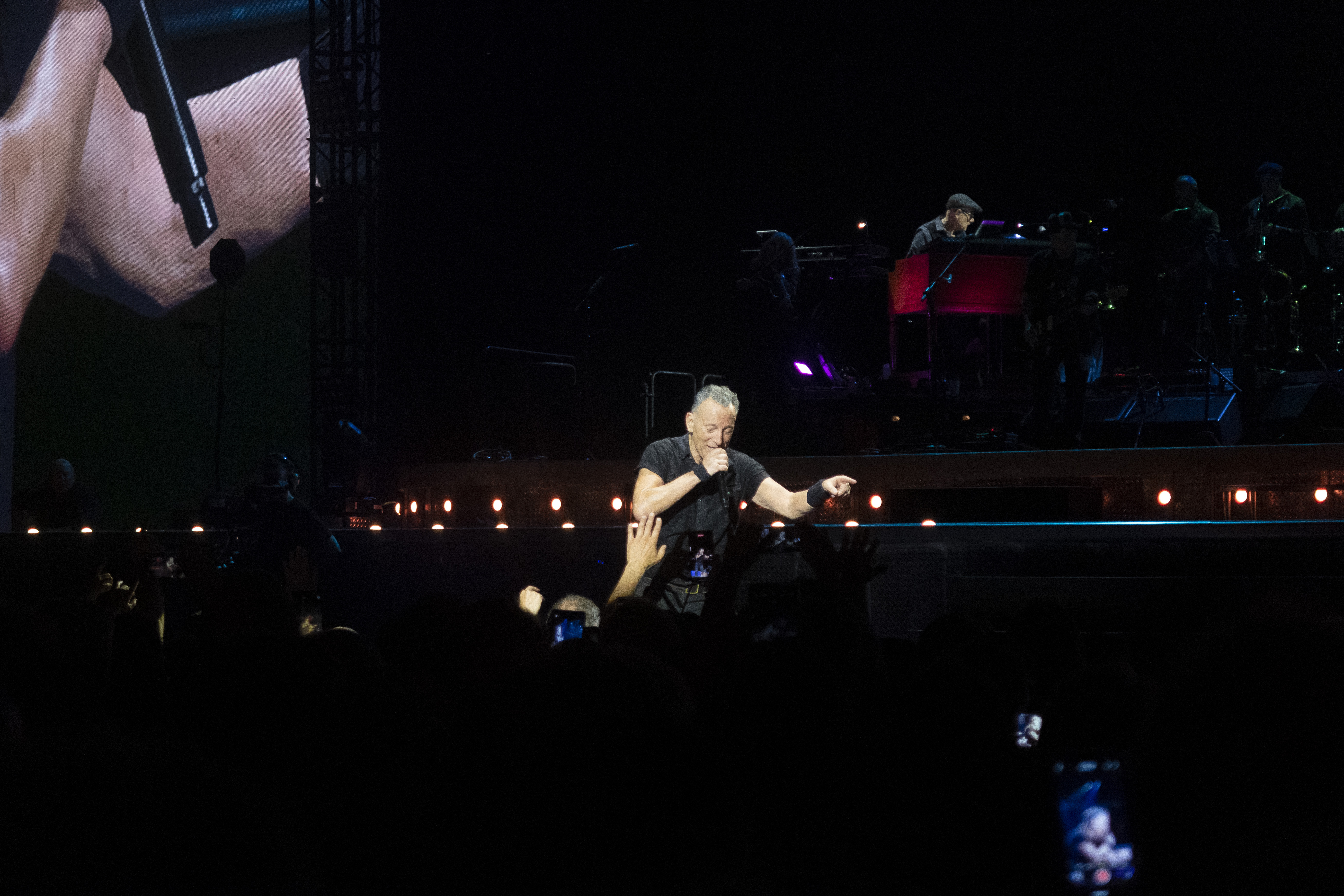
The balance between celebration and reflection defines much of what follows. "Prove It All Night," "The Promised Land" and "Out in the Street" provide some of the evening's most joyous moments, transforming the arena into a giant singalong. Yet even at its most exuberant, the show never completely escapes the shadow cast by the passage of time.
Nowhere is that more apparent than during "Letter to You," whose lyrics are important enough for Springsteen to have them translated into French on the giant screens, or during the devastating "Last Man Standing," performed largely alone before being joined by a mournful trumpet. These songs are not simply about growing older. They are about watching people disappear. Friends. Bandmates. Entire chapters of life.
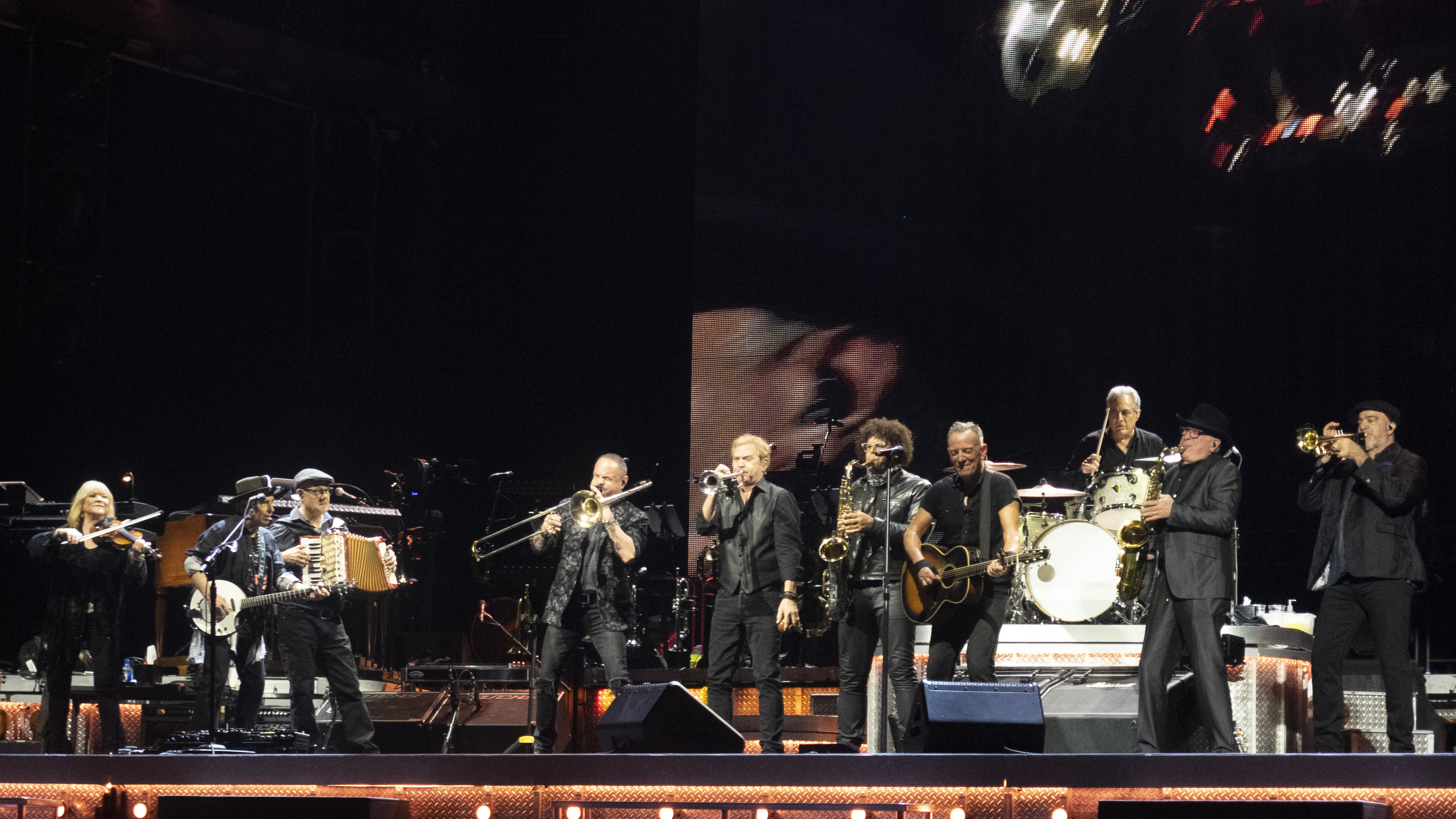
Musically, the E Street Band remains one of the most formidable ensembles in popular music. "Kitty's Back" evolves into an extended showcase for the band's collective talents, moving effortlessly between rock and jazz. "Nightshift," a song that does little for me on record, takes on a completely different life on stage thanks to the horn section and backing vocalists. "Pay Me My Money Down" begins as a work song and ends somewhere in New Orleans. "The E Street Shuffle" reminds everyone why Springsteen earned his nickname in the first place. The man may be the star, but he remains an exceptional bandleader.
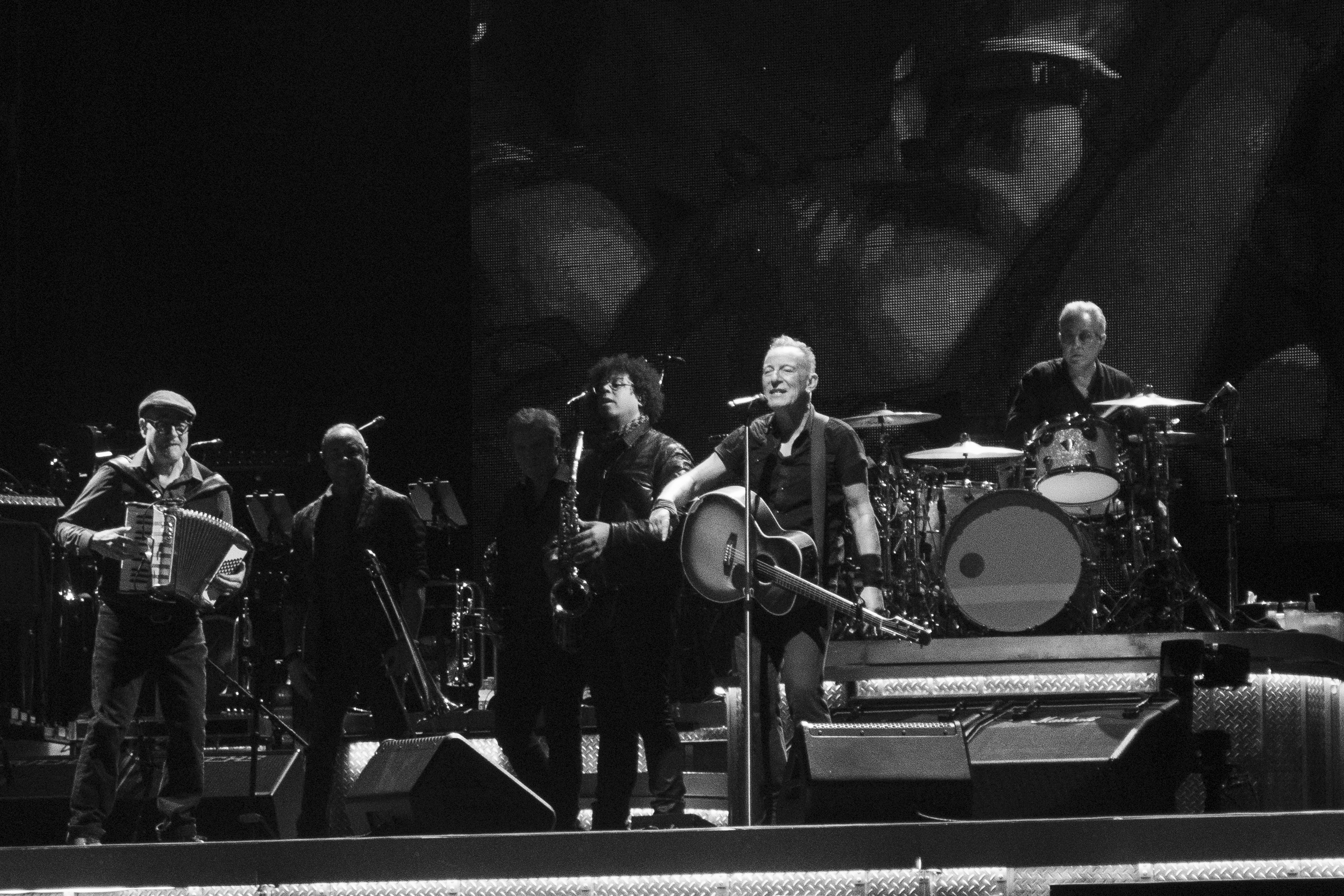
The musicians surrounding him deserve special mention. Jake Clemons carries his uncle Clarence's legacy with dignity while remaining his own player. Steven Van Zandt remains impossibly cool, somewhere between pirate, gangster and rock-and-roll lifer. Nils Lofgren continues to be one of the most underrated guitarists of his generation. Max Weinberg's drumming remains a masterclass in restraint, swing and timing. Together they form something greater than the sum of their considerable individual talents.
The emotional centre of the evening arrives late. "Backstreets," "Because the Night," "She's the One," "Wrecking Ball," "The Rising" and "Badlands" form an extraordinary sequence that moves from loss and longing toward resilience and redemption. By the time Springsteen reaches the bridge of "Badlands," with thousands of voices joining his own, the communal aspect of the experience becomes impossible to deny.
Then comes the payoff.
After nearly three hours of music, the band launches into "Born in the U.S.A.," "Born to Run," "Bobby Jean," "Glory Days" and "Dancing in the Dark." Lesser artists might deploy these songs as crowd-pleasing obligations. Springsteen treats them as gifts. The audience responds accordingly. Every chorus becomes communal property. Every familiar refrain generates another wave of emotion.
Yet even here, the spectre of time refuses to disappear entirely. "Tenth Avenue Freeze-Out" becomes an explicit tribute to absent friends, accompanied by images of Clarence Clemons and Danny Federici. The message is simple and heartbreaking: the E Street Band carries its dead with it.
After the band leaves the stage, Bruce returns alone for "I'll See You In My Dreams." The title says everything that needs to be said. Throughout the evening, the show has wrestled with memory, absence and mortality. Friends are gone. Bandmates are gone. Entire chapters of life have disappeared into the past, yet the final message is not one of despair; it is one of continuity. The songs remain. The stories remain. The people we carry with us remain. Three hours earlier, Springsteen had opened the evening with "Ghosts." He closes it by promising that they never really leave.
SETLIST:

20230516La%20De%CC%81fense%20ArenaNanterre_61.jpg)
20230516La%20De%CC%81fense%20ArenaNanterre_2.jpg)
20230516La%20De%CC%81fense%20ArenaNanterre_60.jpg)
20230516La%20De%CC%81fense%20ArenaNanterre_59.jpg)
20230516La%20De%CC%81fense%20ArenaNanterre_58.jpg)
20230516La%20De%CC%81fense%20ArenaNanterre_57.jpg)
20230516La%20De%CC%81fense%20ArenaNanterre_56.jpg)
20230516La%20De%CC%81fense%20ArenaNanterre_55.jpg)
20230516La%20De%CC%81fense%20ArenaNanterre_54.jpg)
20230516La%20De%CC%81fense%20ArenaNanterre_1.jpg)
20230516La%20De%CC%81fense%20ArenaNanterre_53.jpg)
20230516La%20De%CC%81fense%20ArenaNanterre_52.jpg)
20230516La%20De%CC%81fense%20ArenaNanterre_50.jpg)
20230516La%20De%CC%81fense%20ArenaNanterre_49.jpg)
20230516La%20De%CC%81fense%20ArenaNanterre_46.jpg)
20230516La%20De%CC%81fense%20ArenaNanterre_51.jpg)
20230516La%20De%CC%81fense%20ArenaNanterre_48.jpg)
20230516La%20De%CC%81fense%20ArenaNanterre_47.jpg)
20230516La%20De%CC%81fense%20ArenaNanterre_45.jpg)
20230516La%20De%CC%81fense%20ArenaNanterre_44.jpg)
20230516La%20De%CC%81fense%20ArenaNanterre_42.jpg)
20230516La%20De%CC%81fense%20ArenaNanterre_40.jpg)
20230516La%20De%CC%81fense%20ArenaNanterre_41.jpg)
20230516La%20De%CC%81fense%20ArenaNanterre_39.jpg)
20230516La%20De%CC%81fense%20ArenaNanterre_38.jpg)
20230516La%20De%CC%81fense%20ArenaNanterre_35.jpg)
20230516La%20De%CC%81fense%20ArenaNanterre_43.jpg)
20230516La%20De%CC%81fense%20ArenaNanterre_37.jpg)
20230516La%20De%CC%81fense%20ArenaNanterre_34.jpg)
20230516La%20De%CC%81fense%20ArenaNanterre_36.jpg)
20230516La%20De%CC%81fense%20ArenaNanterre_33.jpg)
20230516La%20De%CC%81fense%20ArenaNanterre_32.jpg)
20230516La%20De%CC%81fense%20ArenaNanterre_31.jpg)
20230516La%20De%CC%81fense%20ArenaNanterre_30.jpg)
20230516La%20De%CC%81fense%20ArenaNanterre_29.jpg)
20230516La%20De%CC%81fense%20ArenaNanterre_26.jpg)
20230516La%20De%CC%81fense%20ArenaNanterre_28.jpg)
20230516La%20De%CC%81fense%20ArenaNanterre_25.jpg)
20230516La%20De%CC%81fense%20ArenaNanterre_22.jpg)
20230516La%20De%CC%81fense%20ArenaNanterre_24.jpg)
20230516La%20De%CC%81fense%20ArenaNanterre_23.jpg)
20230516La%20De%CC%81fense%20ArenaNanterre_21.jpg)
20230516La%20De%CC%81fense%20ArenaNanterre_20.jpg)
20230516La%20De%CC%81fense%20ArenaNanterre_19.jpg)
20230516La%20De%CC%81fense%20ArenaNanterre_18.jpg)
20230516La%20De%CC%81fense%20ArenaNanterre_17.jpg)
20230516La%20De%CC%81fense%20ArenaNanterre_11.jpg)
20230516La%20De%CC%81fense%20ArenaNanterre_14.jpg)
20230516La%20De%CC%81fense%20ArenaNanterre_13.jpg)
20230516La%20De%CC%81fense%20ArenaNanterre_12.jpg)
20230516La%20De%CC%81fense%20ArenaNanterre_16.jpg)
20230516La%20De%CC%81fense%20ArenaNanterre_10.jpg)
20230516La%20De%CC%81fense%20ArenaNanterre_9.jpg)
20230516La%20De%CC%81fense%20ArenaNanterre_8.jpg)
20230516La%20De%CC%81fense%20ArenaNanterre_7.jpg)
20230516La%20De%CC%81fense%20ArenaNanterre_6.jpg)
20230516La%20De%CC%81fense%20ArenaNanterre_5.jpg)
20230516La%20De%CC%81fense%20ArenaNanterre_3.jpg)
20230516La%20De%CC%81fense%20ArenaNanterre_2.jpg)
20230516La%20De%CC%81fense%20ArenaNanterre_1.jpg)
20230516La%20De%CC%81fense%20ArenaNanterre_30.jpg)
20230516La%20De%CC%81fense%20ArenaNanterre.jpg)
20230516La%20De%CC%81fense%20ArenaNanterre_27.jpg)
20230516La%20De%CC%81fense%20ArenaNanterre_26.jpg)
20230516La%20De%CC%81fense%20ArenaNanterre_28.jpg)
20230516La%20De%CC%81fense%20ArenaNanterre_25.jpg)
20230516La%20De%CC%81fense%20ArenaNanterre_4.jpg)
20230516La%20De%CC%81fense%20ArenaNanterre_20.jpg)
20230516La%20De%CC%81fense%20ArenaNanterre_22.jpg)
20230516La%20De%CC%81fense%20ArenaNanterre_24.jpg)
20230516La%20De%CC%81fense%20ArenaNanterre_19.jpg)
20230516La%20De%CC%81fense%20ArenaNanterre_23.jpg)
20230516La%20De%CC%81fense%20ArenaNanterre_17.jpg)
20230516La%20De%CC%81fense%20ArenaNanterre_18.jpg)
20230516La%20De%CC%81fense%20ArenaNanterre_16.jpg)
20230516La%20De%CC%81fense%20ArenaNanterre_14.jpg)

20230516La%20De%CC%81fense%20ArenaNanterre_13.jpg)
20230516La%20De%CC%81fense%20ArenaNanterre_15.jpg)
20230516La%20De%CC%81fense%20ArenaNanterre_12.jpg)
20230516La%20De%CC%81fense%20ArenaNanterre_11.jpg)
20230516La%20De%CC%81fense%20ArenaNanterre_10.jpg)
20230516La%20De%CC%81fense%20ArenaNanterre_9.jpg)
20230516La%20De%CC%81fense%20ArenaNanterre_8.jpg)
20230516La%20De%CC%81fense%20ArenaNanterre_7.jpg)
20230516La%20De%CC%81fense%20ArenaNanterre_6.jpg)




20230516La%20De%CC%81fense%20ArenaNanterre_5.jpg)
20230516La%20De%CC%81fense%20ArenaNanterre_4.jpg)
20230516La%20De%CC%81fense%20ArenaNanterre_3.jpg)











20230516La%20De%CC%81fense%20ArenaNanterre.jpg)


